The Three Powers
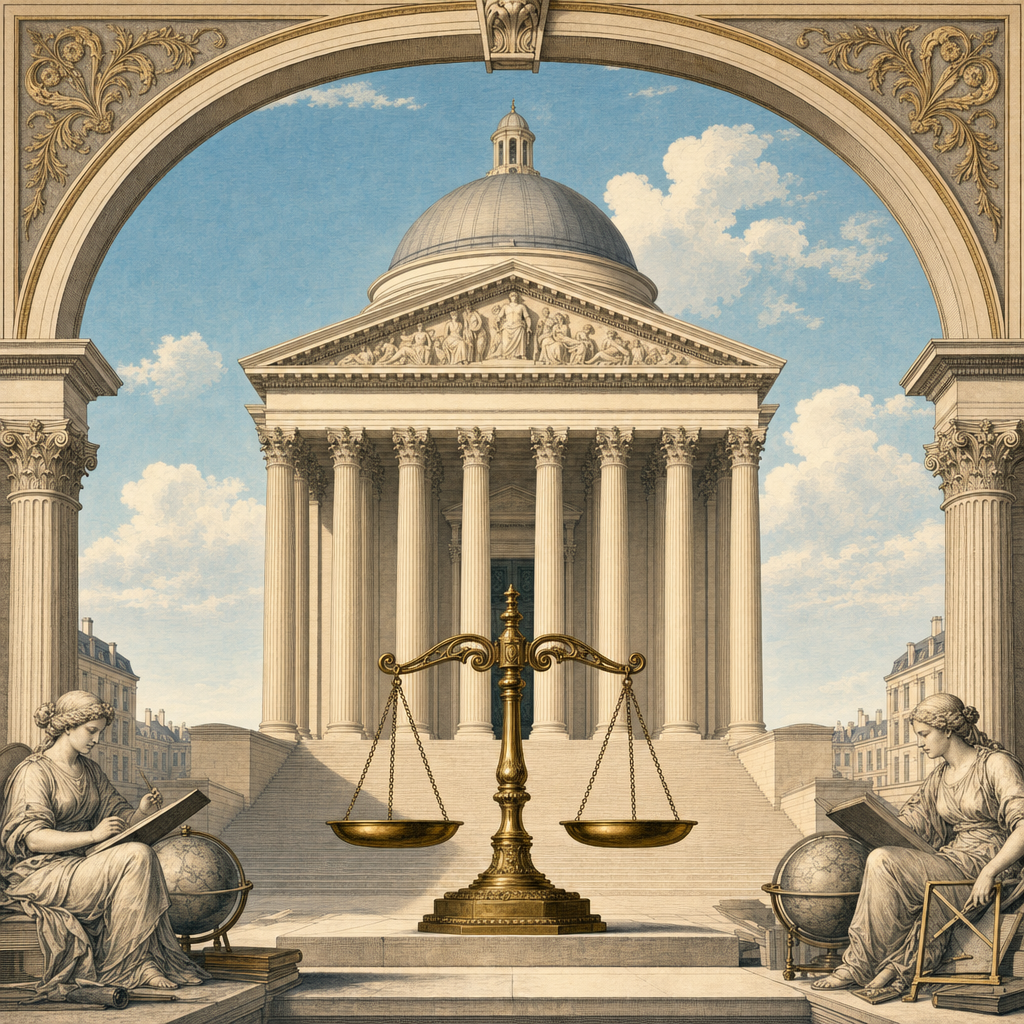
Montesquieu argues that every state exercises three kinds of power. Legislative power makes the laws. Executive power implements them in matters of war, peace, and diplomacy. Judicial power adjudicates disputes and punishes crimes. These three functions are distinct in kind. When they are concentrated in the same hands — whether a single person, a single body, or even a single faction — liberty is impossible, because those who make the laws also enforce them and judge according to them, with no check on arbitrary will.
The English Constitution
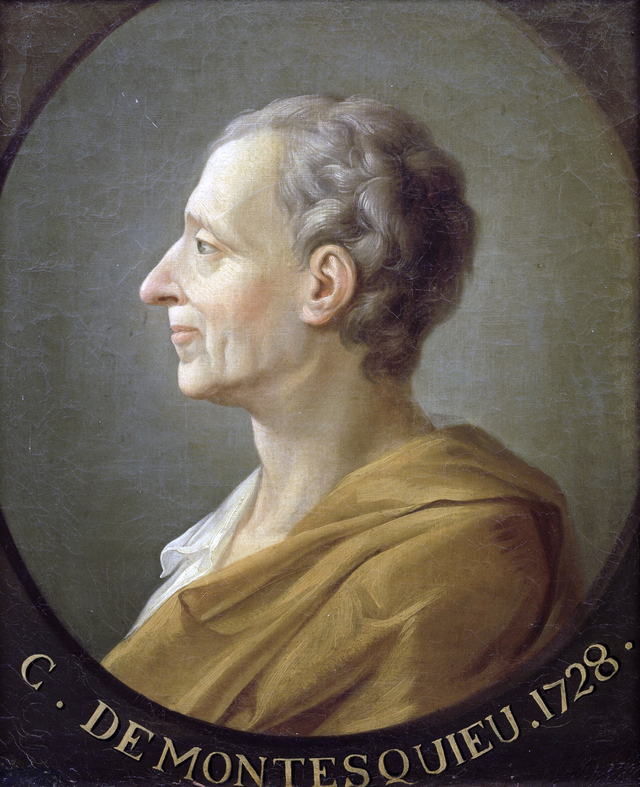
Montesquieu's model for separated government is his idealised picture of the English constitution, which he observed during a stay in England in the 1720s. He saw in England a system where the legislature (Parliament) was separate from the executive (the Crown) and the judiciary (the common law courts) enjoyed a measure of independence. He did not claim this was perfect, but he saw in it an approximation to the institutional conditions of liberty. His account of England — which contemporaries debated even then — was less a description than a prescription: an ideal drawn from existing materials.
Liberty and the Structure of Fear
Political liberty, for Montesquieu, is not the freedom to do whatever one pleases but the security that comes from knowing that one will be governed by laws rather than arbitrary will. This security requires that those who govern should themselves be governed — that power should check power, that no single actor should be able to act without the constraint of another. The genius of constitutional design is the creation of a structure in which self-interested actors, each defending their share of power against encroachment, collectively produce the rule of law that benefits all.
The theory of the separation of powers appears in Book XI of The Spirit of the Laws (1748), particularly chapters 1–6. Madison's deployment of Montesquieu in Federalist No. 47 ("The accumulation of all powers, legislative, executive, and judiciary, in the same hands... may justly be pronounced the very definition of tyranny") shows its direct influence on American constitutional design.
Related Concepts