Why Theology and Metaphysics Both Failed
Comte surveys the two systems Positivism is meant to replace. Theology grounded human unity in Feeling alone, and so commanded the heart for centuries — but it could never truly govern practical or intellectual life, because its account of the world was false. Metaphysics went the other way, elevating abstract Reason, but proved barren: it could dissolve old certainties but build nothing durable in their place. Neither could hold Thought, Feeling, and Action together in one coherent system.
The Heart as the Organizing Principle
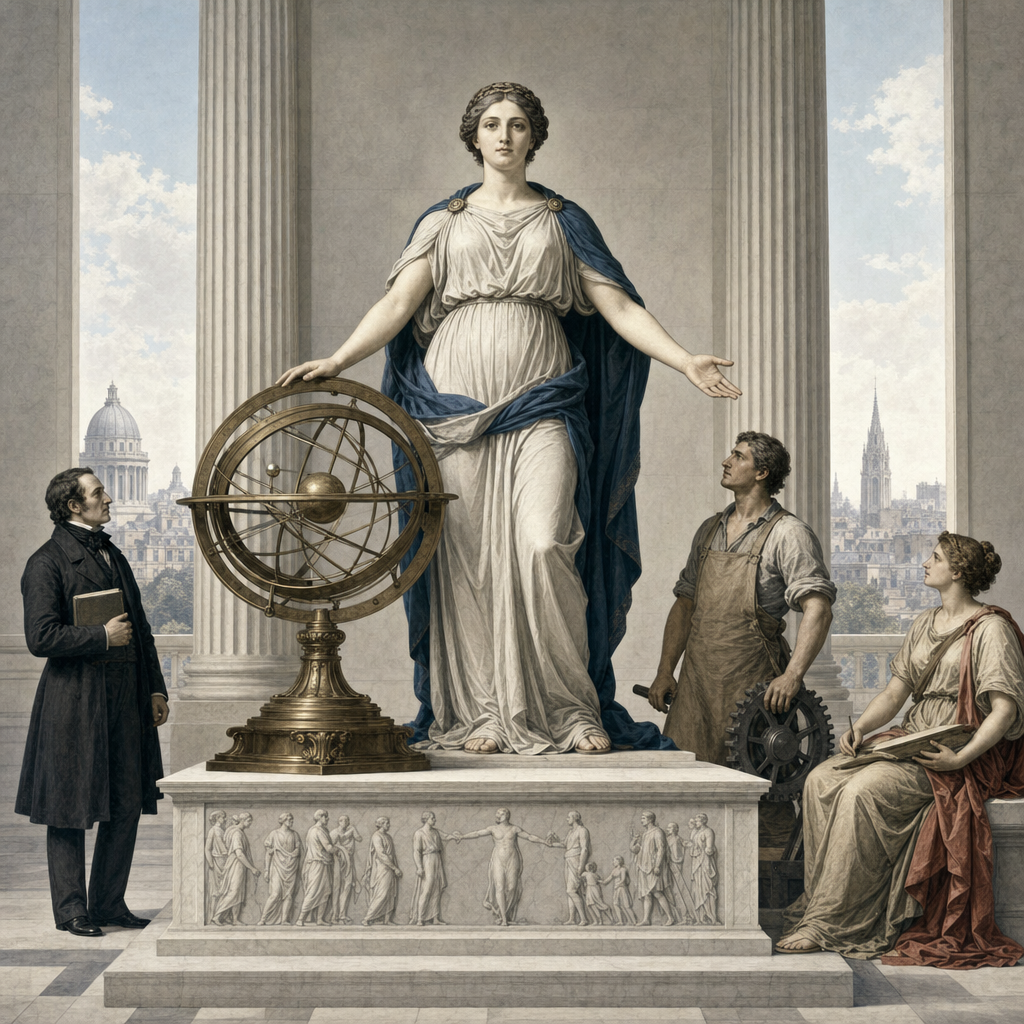
Comte's own solution is to make Affection, not Reason, the centre of the system. Social sympathy — the desire to live for others — is what gives human life coherence, because it alone can unify our scattered thoughts and actions around a single, felt purpose. Intellect and activity are real and necessary, but neither can supply that unifying force on its own.
It is henceforth a fundamental doctrine of Positivism, a doctrine of as great political as philosophical importance, that the Heart preponderates over the Intellect.
Servant, Not Slave
Comte is careful to distinguish his position from the old theological one, in which reason was simply crushed under dogma. Positivism does not ask the intellect to believe without evidence or to abandon its own methods. It asks the intellect to direct its considerable powers toward the problems that feeling proposes, rather than wandering into abstractions useless to social life. Discipline, not suppression, is the relationship he has in mind.
the intellect is to be the servant of the heart, not its slave
An Objective Basis Is Still Required
Feeling alone is not enough, either. Comte insists that a purely subjective unity — human nature considered apart from the real, external order it lives within — would collapse into fantasy. The intellect's task is to discover the actual laws governing man and society, so that love has something solid to work with rather than mere wishes. Subjective principle and objective knowledge, on this account, are two halves of a single design.
Drawn from Chapter I of A General View of Positivism (1848), where Comte lays out the "subjective principle" that governs the rest of the book.
Related Concepts