Politics as Disclosure
The distinctive mark of political action is that it reveals the unique identity of the agent — not what they are (their qualities, roles, functions) but who they are. This disclosure happens in speech and action directed to others; it cannot happen in solitude or in the realm of production. A person's identity is always a gift of others: we cannot see ourselves as we appear to others, and we cannot tell our own stories from the outside.
The Fragility of Public Life
The space of appearance is radically contingent — it depends on the continued presence and commitment of those who sustain it. Unlike the durable objects of the fabricated world, the political realm has no permanent existence: it is constituted anew each time human beings act together, and it collapses when they stop. This is why political power — the capacity to act in concert — cannot be stored or accumulated like the products of work.
The Decline of the Public Realm
Modern mass society, Arendt argues, has systematically destroyed the conditions for genuine public life. The rise of the social — the domain of conformity, administration, and behavioral norms — has colonised the space once occupied by the political. When all human activity becomes a matter of behavior rather than action, the space of appearance contracts to nothing, and with it the very possibility of meaningful political life.
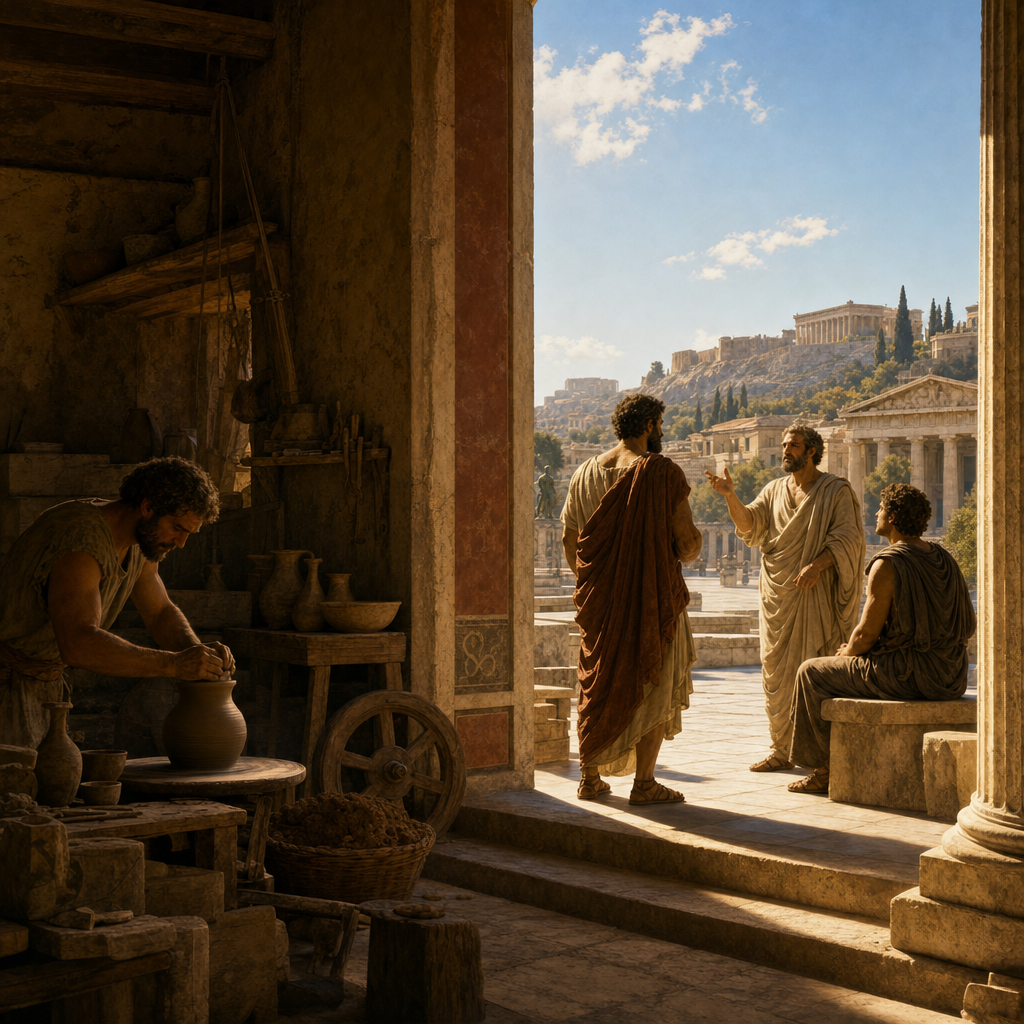
The space of appearance is theorised in chapter 5 of The Human Condition; Arendt connects it to the ancient Greek understanding of the polis as a form of organised remembrance.
Related Concepts