Labor: The Cycle of Life
Labor is the activity that corresponds to the biological process of the human body — its metabolic cycles of consumption and reproduction. Labor produces nothing durable; its products are consumed in the very act of consumption. Modern society, Arendt argues, has elevated this least dignified of human activities into the highest — reducing all human life to the labor process and its satisfactions.
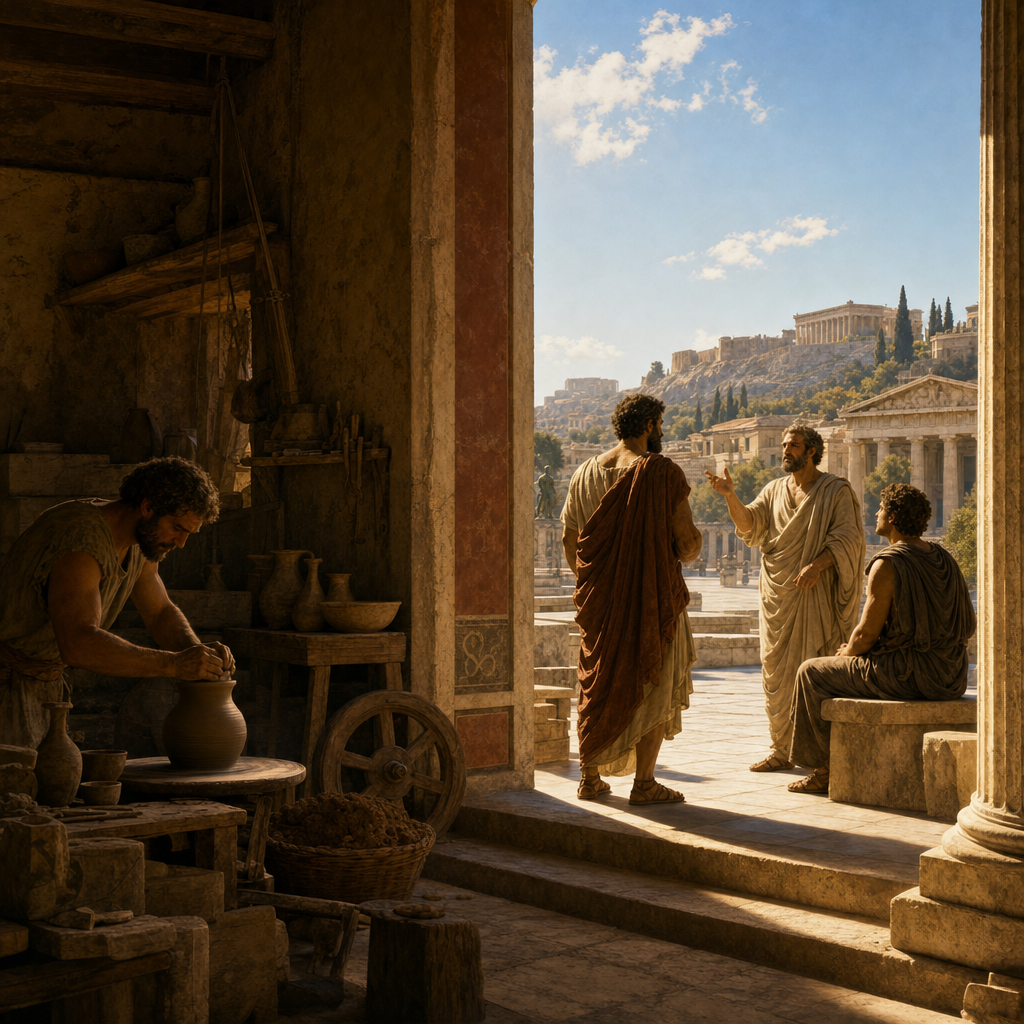
Work: The Fabricated World
Work corresponds to the unnaturalness of human existence — the capacity to violate nature and impose on it a human artifice. The craftsman (homo faber) produces durable objects that outlast individual life and constitute the shared human world. Work has a beginning and an end; its product stands over against nature as something made rather than grown.
Action: Politics and Plurality
Action — the only activity that goes on directly between human beings without the intermediary of things or matter — corresponds to the human condition of plurality. To act is to take an initiative, to begin something new, to insert oneself into the human world and leave a trace in it. Action is the activity through which individuals disclose who they are, as distinct from what they are. It is the highest human activity precisely because it requires others.
The tripartite distinction is developed in chapters 3–5 of The Human Condition (1958). Arendt traces the devaluation of action in favour of labor to Plato's attempt to subordinate politics to philosophy.
Related Concepts