What the Word Means
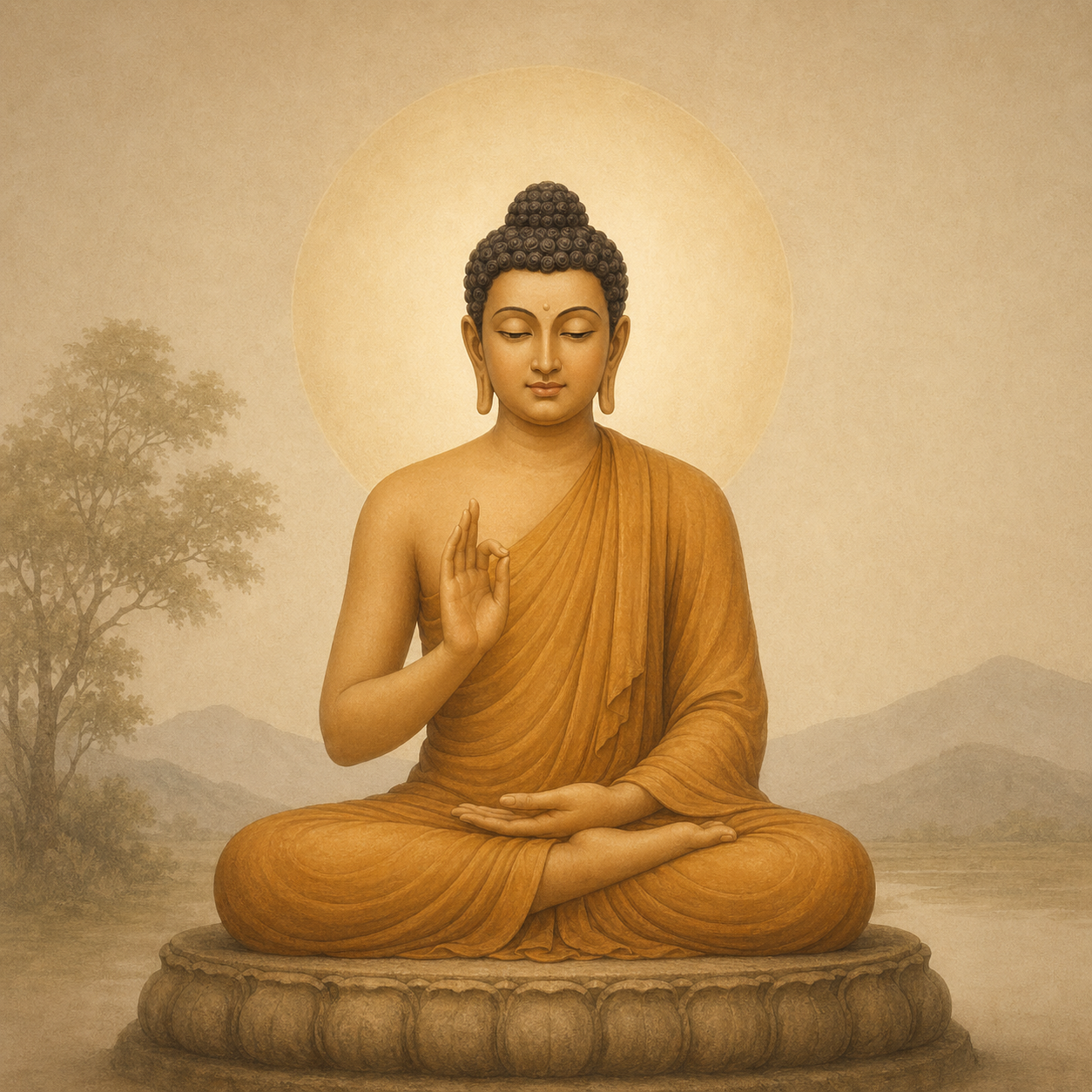
The Pali word nibbana (Sanskrit: nirvana) literally means "extinction" or "blowing out" — as of a flame. What is extinguished is not the person but the three fires that the Buddha identifies as the root causes of suffering: greed (lobha), hatred (dosa), and delusion (moha). Nirvana is not the elimination of experience but the elimination of the compulsive reactivity that distorts experience and generates suffering. The liberated being continues to perceive, think, feel, and act — but without the driven, compulsive quality that characterises unawakened mental life.
The Unconditioned
In the Pali texts, the Buddha describes nirvana as "the unborn, unbecome, unmade, unconditioned" — the only unconditioned phenomenon. Everything else in experience arises dependent on conditions and passes away when conditions change; nirvana alone is not conditioned. This does not make it a mystical realm beyond the natural world; it means that the state of liberation is not produced by causes and conditions in the way that ordinary mental states are, and so does not pass away when conditions change. It is the ground of stability in a world of flux.
The Noble Silence
When asked whether the Buddha exists after death, whether nirvana is eternal or temporary, whether the liberated self merges with or remains distinct from the cosmos, the Buddha consistently refuses to answer. These "undetermined questions" are not evaded because the Buddha doesn't know the answer but because answering them would involve accepting conceptual frameworks that are themselves part of the problem. Nirvana cannot be adequately described in the language of being and non-being, sameness and difference, because those concepts apply to conditioned phenomena, and nirvana is unconditioned.
Two Nirvanas
The Theravada tradition distinguishes two forms of nirvana. Nirvana-with-remainder (sa-upadisesa-nibbana) is the liberation achieved while still alive — the state of the arahant who has extinguished craving but still has a body and mind that continue until death. Nirvana-without-remainder (anupadisesa-nibbana) is what occurs at the death of an arahant: the psychophysical process does not continue, and what precisely this means is one of the questions to which the Buddha maintained noble silence.
Nirvana is philosophically contested both within Buddhism and in comparison with other traditions. Some scholars compare it to the Brahmanical concept of moksha (liberation), which can imply union with Brahman; Buddhists typically reject this comparison, insisting that nirvana involves no such metaphysical merger. The Madhyamaka philosopher Nagarjuna controversially equated samsara and nirvana, arguing that the distinction between conditioned and unconditioned reality is itself a conventional designation rather than an ultimate one.
Related Concepts