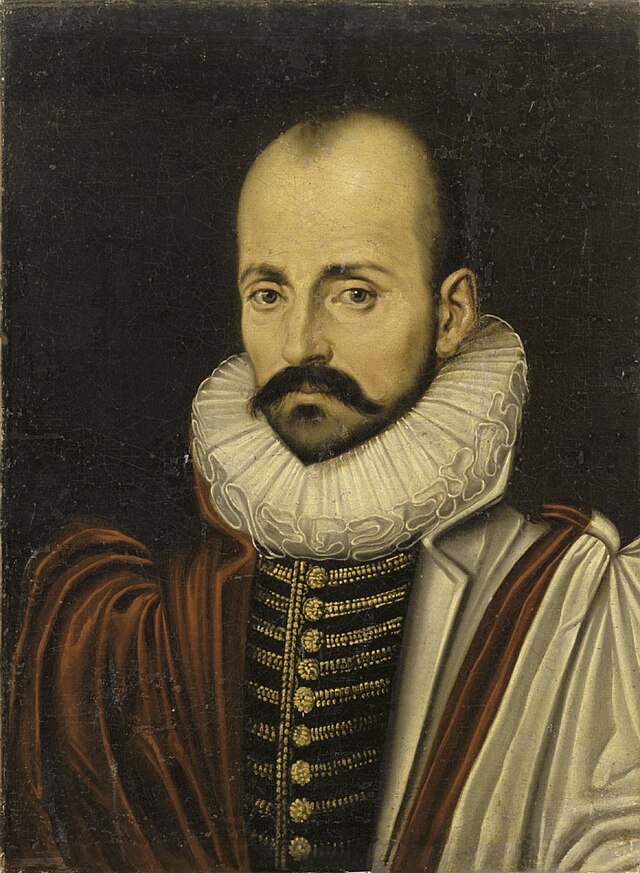
Against System-Building
every man carries the entire form of human condition. Authors communicate themselves to the people by some especial and extrinsic mark; I, the first of any, by my universal being; as Michel de Montaigne, not as a grammarian, a poet, or a lawyer.
The philosophers who 'form' man are constructing an ideal — they strip away what is accidental, contingent, local, and produce a universal figure. Montaigne refuses this move. The universal in his Essays is not abstracted out of the particular but arrived at through it. His vanity, his memory lapses, his bodily complaints, his shifting opinions — all of this is data, not noise.
The Form of Human Condition
Every man carries the entire form of human condition, Montaigne writes. This is his answer to the charge that self-examination is self-indulgent. The self is not a private exhibit; it is a specimen of the species. By examining himself honestly, without flattery or false modesty, Montaigne gives his reader something philosophy rarely provides: the actual texture of a mind encountering the world.
Ordinary Life as Philosophy
All moral philosophy may as well be applied to a common and private life as to one of richer composition. Montaigne dismisses the idea that wisdom requires extraordinary circumstances. The kitchen, the garden, the sick bed, the dinner conversation — these are the arenas in which we can actually observe the virtues and vices, the constancy and inconsistency, that philosophy discusses in the abstract. He invites us to do the same.
From Book III, Chapter II of the Essays. The opening sentence — 'Others form man; I only report him' — is among the most quoted lines in the entire collection and has been read as the manifesto of the essay form.
Related Concepts