The Sequence
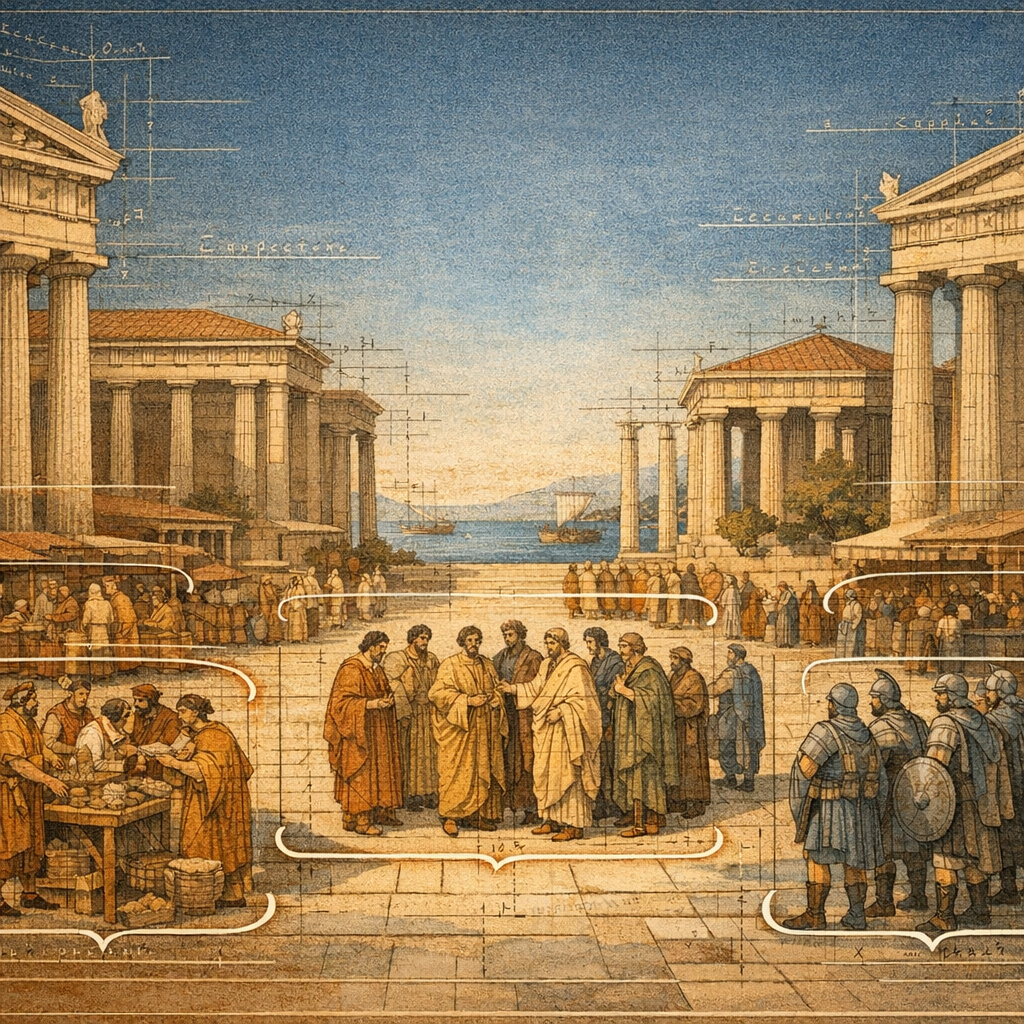
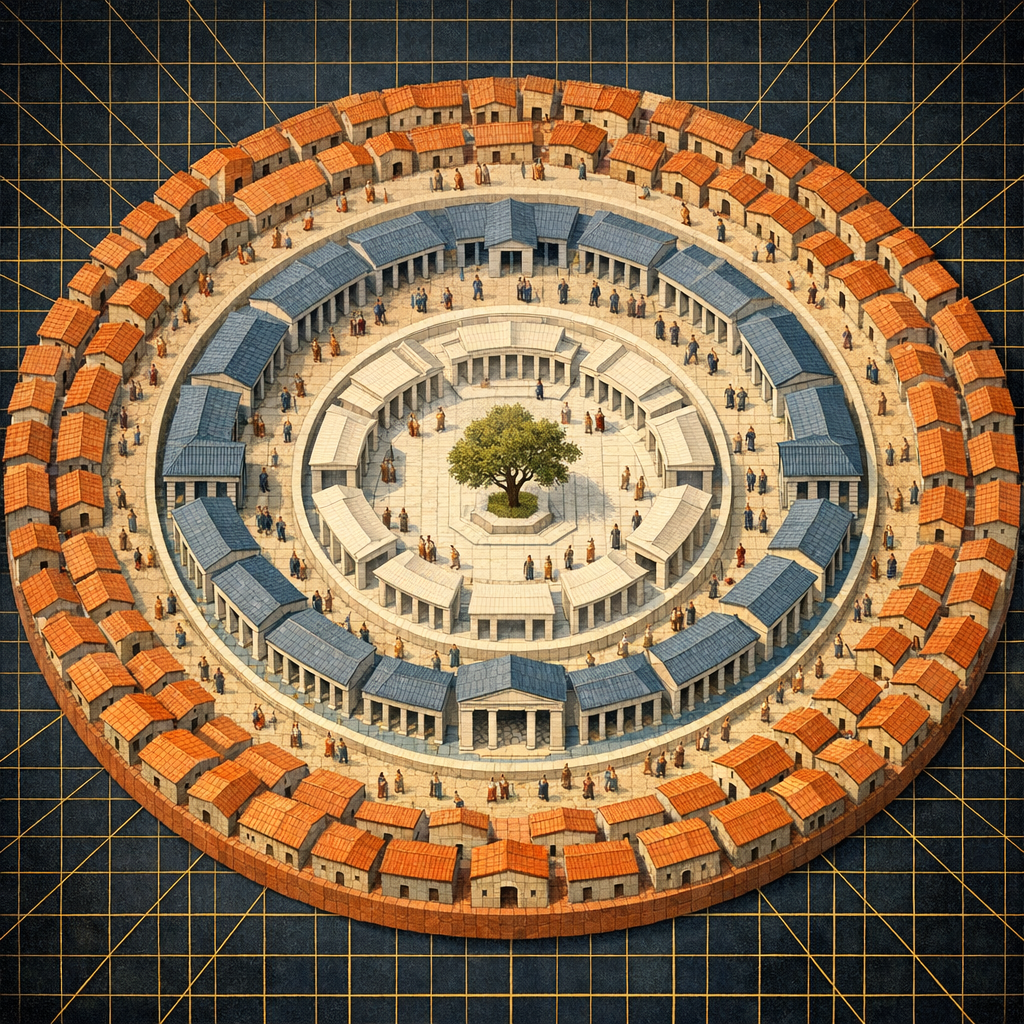
The ideal aristocracy declines when its guardians begin to value honour over wisdom, producing timocracy — the rule of the ambitious, exemplified by Sparta. The timocrat's son, watching his father humiliated by the pursuit of honour, turns toward wealth instead: oligarchy emerges. But the oligarchic city is divided between rich and poor, and the poor eventually overwhelm the rich: democracy is born.
The Democratic Man
In the democratic city, every appetite is treated as equal to every other. Liberty becomes licence; discipline is condemned as servitude. The children of the demos grow up ungoverned by reason or authority. Freedom, pushed to its extreme, destroys itself — preparing the ground for tyranny.
The excess of liberty, whether in States or individuals, seems only to
pass into excess of slavery.
The Tyrant's Soul
The tyrant emerges from the most ungoverned democratic souls: enslaved to a single monstrous passion, he destroys friendship, corrupts law, and can trust no one. He appears most powerful and most free — and is in reality most wretched. The sequence ends not in strength but in the most abject servitude: the city enslaved to a man who is himself enslaved to desire.
Politics as Psychology
Each constitutional type maps directly onto a psychological type. Plato's insistence is that politics is psychology writ large: the kind of city a people builds is the kind of soul they collectively possess. If you want to understand a city's vices, look at the vices its citizens most admire.
The five-constitution sequence appears in Books VIII–IX of The Republic. Plato's analysis of democratic licence anticipating tyranny has been cited in debates about Weimar Germany and other democratic collapses.
Related Concepts