The Regress of Motion
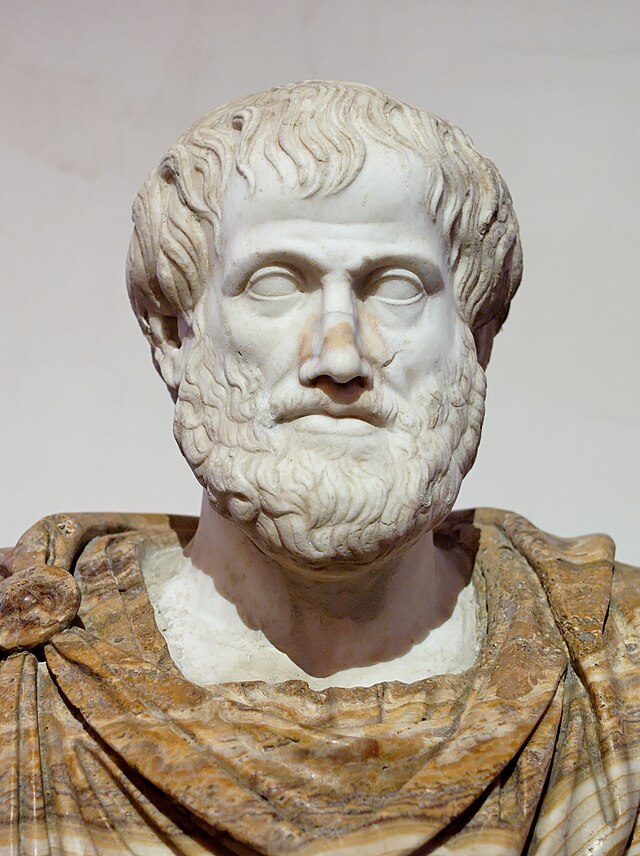
Everything that moves is moved by something else. A stone is pushed by a hand; the hand is moved by a muscle; the muscle is contracted by a nerve impulse. But this chain cannot go back infinitely, Aristotle argues, nor can it go in a circle. There must be a first mover — something that initiates motion without itself being moved by anything prior. Otherwise motion could never have begun, and the regularity and eternity of the heavens would be inexplicable.
Pure Actuality
The Unmoved Mover must be wholly actual — containing no potentiality whatsoever. A being with any potentiality could in principle fail to actualise it, or could be changed by something external. Pure actuality is the only mode of being that guarantees eternal, necessary activity. The Unmoved Mover therefore has no matter, no parts, no location in space, and no capacity to be otherwise than it is. It is the most fully real thing in the universe, and the least like the material things we encounter in daily life.
Thought Thinking Itself
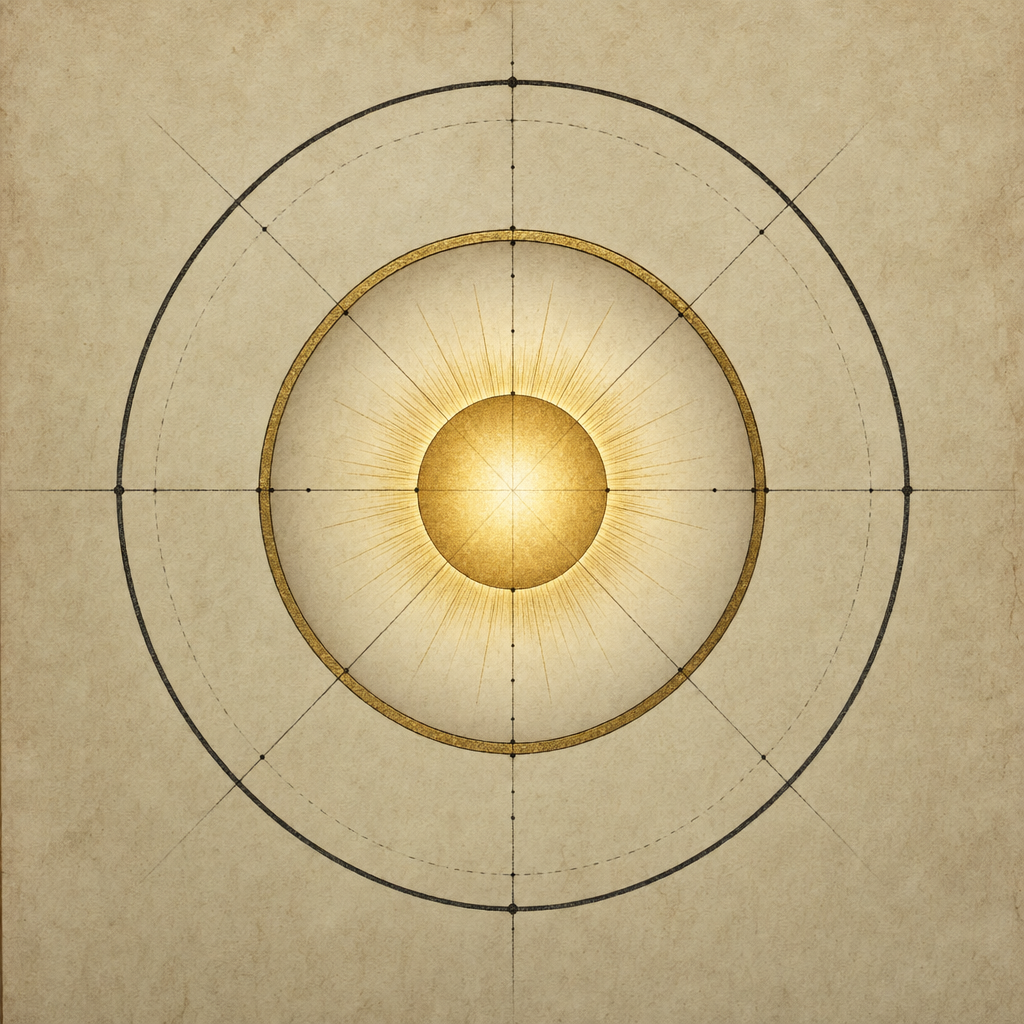
What does a being of pure actuality do? It thinks — and since it can have no external object (that would make it dependent on something outside itself), it thinks itself. Aristotle calls it "thought of thought" (noēsis noēseōs). It moves the cosmos not by pushing or pulling but by being the object of love and desire: the celestial spheres move eternally in their perfect circles out of a kind of striving toward the perfection the Mover embodies. The cosmos is ordered because everything in it is, in its own way, reaching toward the divine.
The Unmoved Mover is argued for in Physics VIII and described in Metaphysics XII.6–9. The description of the divine intellect as "thought of thought" appears in Metaphysics XII.9. This passage became one of the most commented-upon in ancient and medieval philosophy.
Related Concepts