The Sole American Music
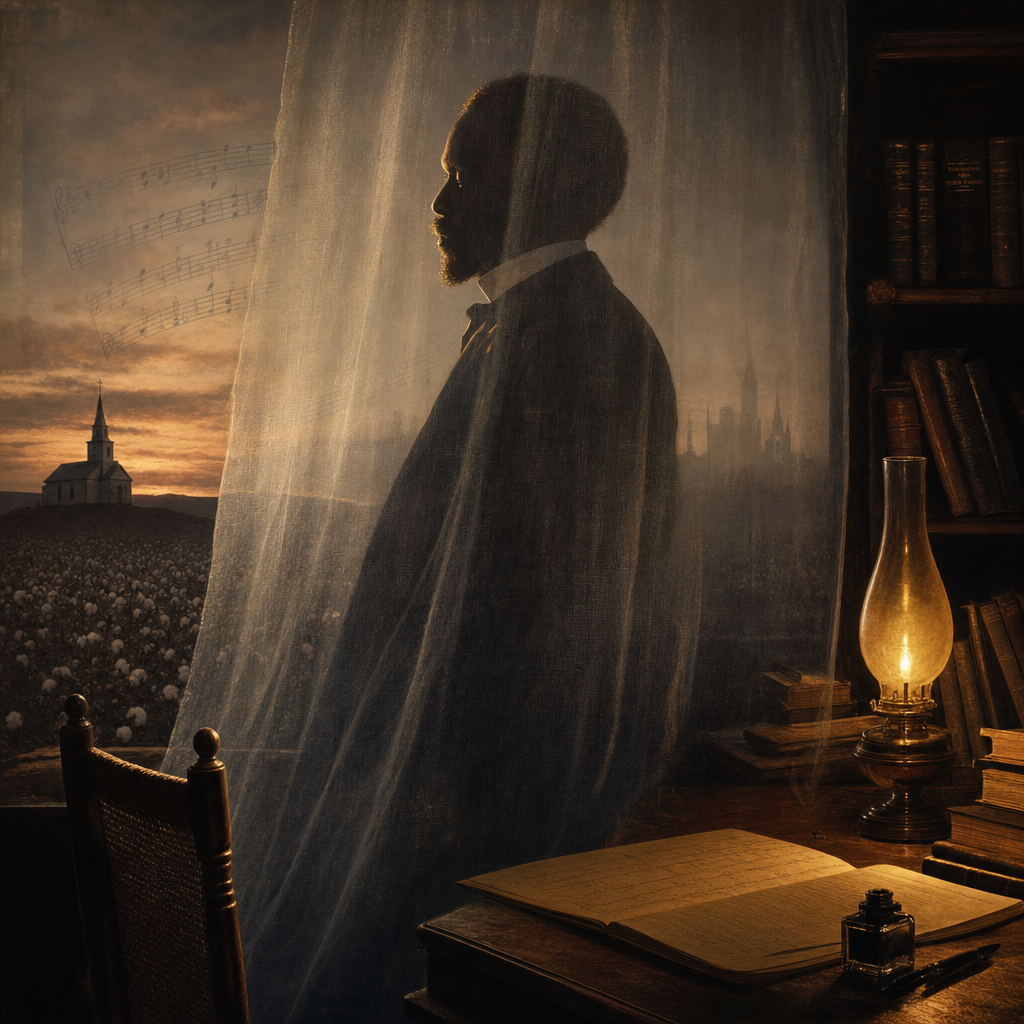
A bar of music sits before each chapter of Souls — Du Bois is composing as much an oratorio as a book. By the time he reaches the final essay, the argument is unmistakable: the slave song is not a curiosity to be patronised but the United States' singular contribution to the world's art. Whatever else America has produced — vigour, ingenuity, dollars — beauty came to it through the cabin door.
And so by fateful chance the Negro folk-song—the rhythmic cry of the slave—stands to-day not simply as the sole American music, but as the most beautiful expression of human experience born this side the seas.
A Theology in Sorrow and Hope
The songs are sorrow songs, but they are not despair. Beneath the minor cadences runs a stubborn faith in ultimate justice — sometimes as life, sometimes as death, sometimes as a fair world beyond — that men will at last be judged by their souls and not their skins. The aesthetic claim is therefore also a theological one: the slaves bequeathed the republic not only its music but its hope.
Through all the sorrow of the Sorrow Songs there breathes a hope—a faith in the ultimate justice of things. The minor cadences of despair change often to triumph and calm confidence. Sometimes it is faith in life, sometimes a faith in death, sometimes assurance of boundless justice in some fair world beyond. But whichever it is, the meaning is always clear: that sometime, somewhere, men will judge men by their souls and not by their skins.
Three Gifts to the Nation
Du Bois names the gifts the Black population has brought to America: story and song; sweat and brawn that built the economic empire; and a gift of the Spirit — the pleading, generation after generation, that the nation honour Justice, Mercy, and Truth lest it be cursed. The closing question is not rhetorical but accusatory: "Would America have been America without her Negro people?"
Your country? How came it yours? Before the Pilgrims landed we were here. Here we have brought our three gifts and mingled them with yours: a gift of story and song—soft, stirring melody in an ill-harmonized and unmelodious land; the gift of sweat and brawn to beat back the wilderness, conquer the soil, and lay the foundations of this vast economic empire two hundred years earlier than your weak hands could have done it; the third, a gift of the Spirit.
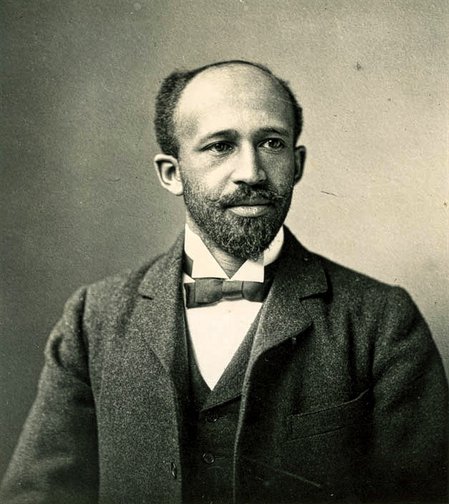
From "Of the Sorrow Songs" (Chapter XIV), the closing essay of The Souls of Black Folk.
Related Concepts