Faith as Belief Plus Trust
Swinburne analyses faith as a complex disposition rather than a simple mental state. Faith in God involves at minimum: belief that God exists, belief that God has certain morally relevant properties (goodness, care for persons), and trust — a disposition to rely on God, to act as if God's purposes will be fulfilled, even in conditions of uncertainty. The trust component distinguishes faith from mere intellectual assent: one can believe that God exists without trusting in God, but one cannot have religious faith without trust.
Probability and the Rationality Threshold
Swinburne argues that faith is rational if the evidence makes theism significantly probable — not necessarily more probable than not (though he has argued separately that it is). Specifically, it is rational to act on a belief when the expected value of acting on it, given its probability, exceeds the expected value of acting on its denial. Since the expected value of faith if God exists is very high (eternal life, relationship with God) and the cost of faith if God does not exist is relatively low (some constraints on behaviour), faith is rational even at relatively low probabilities of theism.
Revealed Theology and Natural Theology
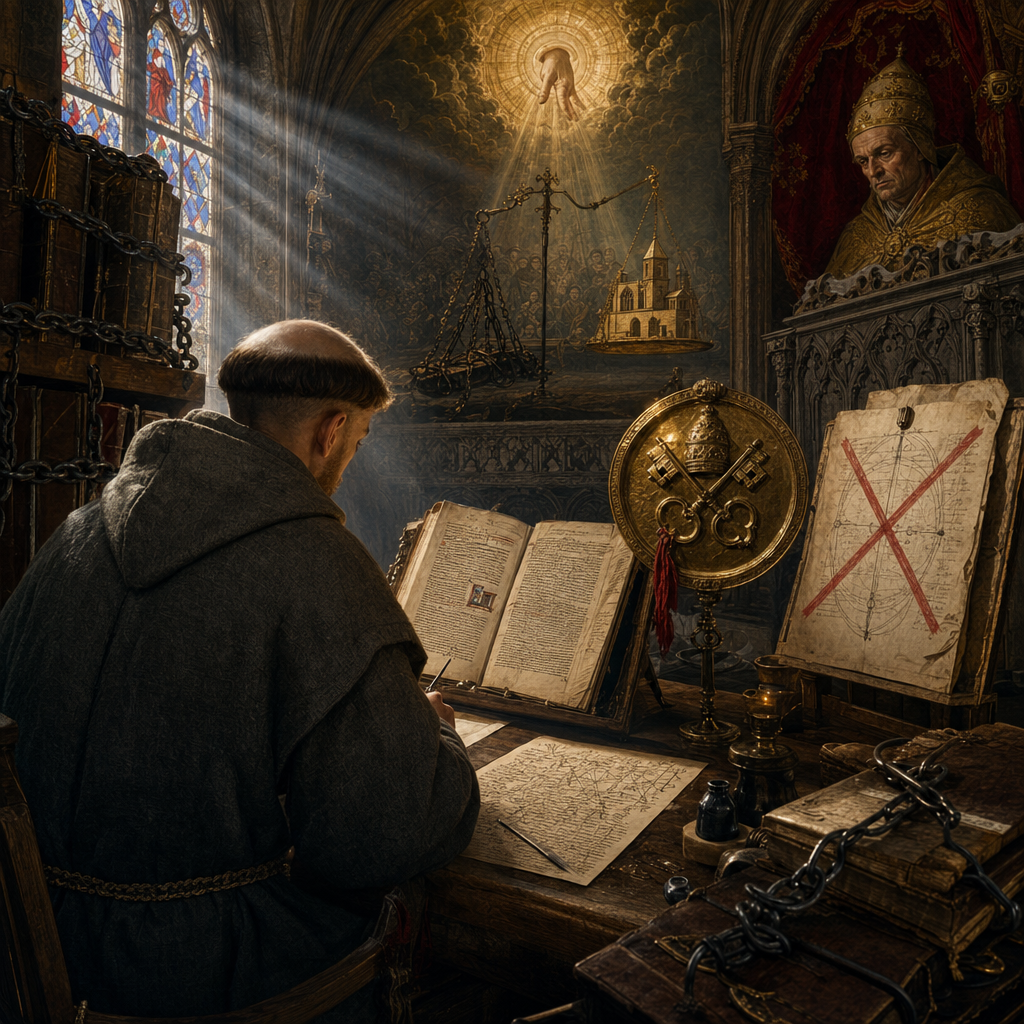
Swinburne argues that natural theology — the philosophical arguments for God's existence — provides the rational foundation for revealed theology — the acceptance of specific religious claims (the Incarnation, the authority of Scripture, the sacraments). It is rational to accept revealed claims if the probability that a given God-like being has revealed them is raised by the natural theological evidence for God's existence. Revelation is not irrational; it is the next step in a rational inquiry that begins with natural theology and ends with the full commitment of faith.
Faith and Reason (1981) is the third volume of Swinburne's trilogy, following The Coherence of Theism (1977) and The Existence of God (1979). His decision-theoretic argument for the rationality of faith draws on Pascal's Wager but without its all-or-nothing structure.
Related Concepts