The Stoic Argument from Design
The Stoic Balbus in Book II delivers the most elaborate ancient version of the argument from design: the universe's extraordinary order, beauty, and fitness for life cannot be explained by chance. The heavens move in perfect mathematical order; the human body's organisation is exquisitely suited to its functions; the animal world displays countless examples of adaptation and purpose. This pervasive purposiveness points to a divine craftsman — not a personal God who intervenes in human affairs, but a rational principle (logos) that pervades and governs the whole. Balbus's account is in effect a natural theology: a proof of divine existence and providence from the book of nature alone, without appeal to revealed religion or tradition.
The Epicurean Critique
The Epicurean Velleius in Book I argues that the gods exist but are wholly indifferent to the world: they live in undisturbed bliss in the spaces between worlds (intermundia) and would be disturbed, not benefited, by involvement in cosmic administration. The universe was not designed; its order arose by chance from the random collision of atoms. Cotta's Academic response to Velleius is swift: if the gods are perfectly rational and blessed, what prevents them from caring about the world? And the claim that complex order arises by chance strains credulity to the breaking point.
The Sceptical Conclusion
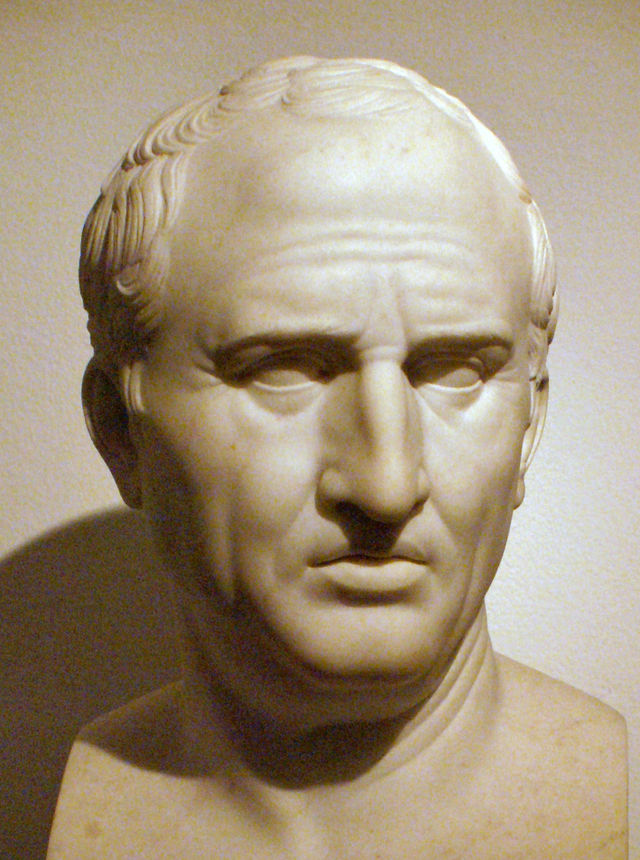
Cicero himself, through his spokesman Cotta, finds that neither the Epicurean nor the Stoic account survives critical examination. The Stoics' argument from design is powerful but does not establish the personal providence they claim; the problem of evil (suffering and injustice in the world) makes naive theism hard to sustain. The Academic conclusion is that we should withhold assent on theological questions while respecting ancestral religious traditions as socially and morally valuable — not because they are proven true, but because they cannot be proven false and serve important human purposes. Cicero's dialogue anticipates Hume's Dialogues Concerning Natural Religion by two millennia.
De Natura Deorum is our fullest surviving account of Hellenistic theology. Balbus's argument from design in Book II was cited and developed by Christian natural theologians from Lactantius to Thomas Aquinas. Hume modelled the Dialogues Concerning Natural Religion (1779) explicitly on Cicero's three-speaker format.
Related Concepts