Doubt Requires a Background
To doubt a proposition is to be in a position where it matters whether the proposition is true, where one has some grip on what would settle the question, and where one has specific grounds for suspicion. A child who asks "but how do you know you have two hands?" is not expressing a genuine doubt but learning to use words. A philosopher who constructs a scenario in which all experience is a dream has not identified a genuine uncertainty but has shown that any scenario can be described in any language — a discovery about language, not about knowledge.
Universal Doubt as Self-Undermining
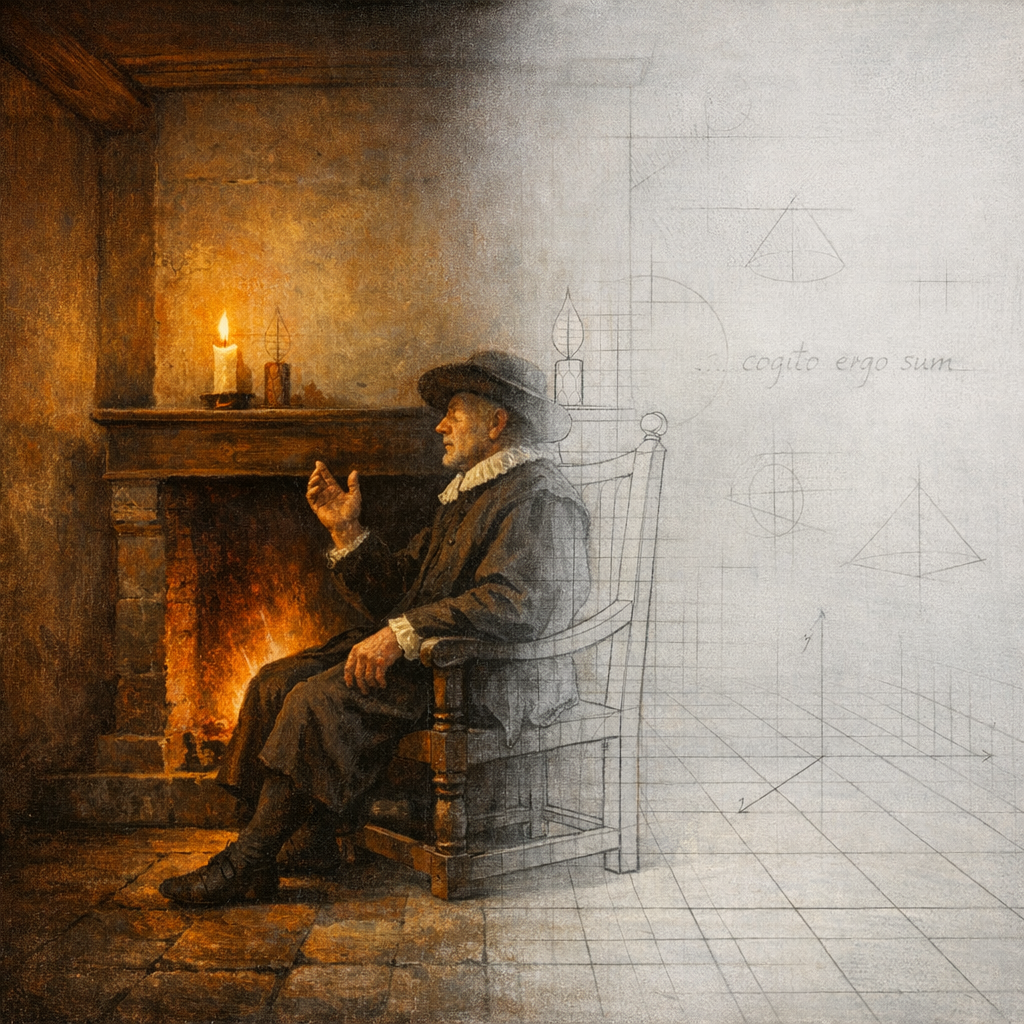
If I doubt that anything exists, including the experiences and memories on which my doubting depends, I have left no ground from which to doubt. The sceptic wants to take doubt to its limit, but at that limit, doubt collapses into incoherence. Descartes's methodological doubt worked because it retained a doubter — the cogito — as fixed point. Radical scepticism, which doubts even the existence of the thinking self, cannot even get started. It is a thought experiment that destroys the equipment needed to think it.
Action as the Bedrock
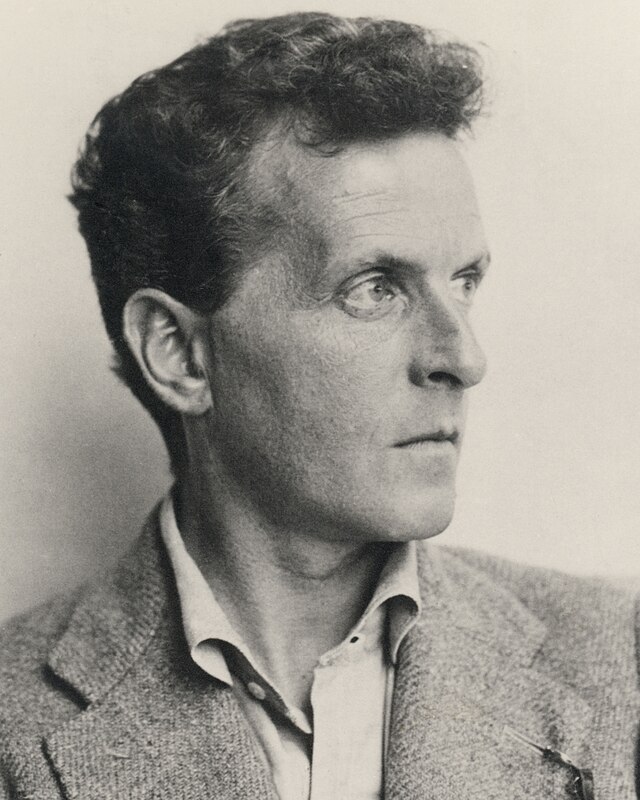
Wittgenstein's final answer to scepticism is not a proof but a pointing to practice. "The child learns by believing the adult. Doubt comes after belief." Certainty is not prior doubt resolved — it is the unreflective form of life out of which doubt occasionally emerges for specific, grounded purposes. At the end of justifications, we must act. And action — getting out of bed, reaching for the cup, crossing the street — presupposes a certainty that is not knowledge but trust, not justified but lived.
The discussion of doubt's prerequisites runs throughout On Certainty; key passages are §§115–125 and §§310–325. The observation that "doubt comes after belief" is at §160. Wittgenstein wrote the last entries in On Certainty two days before his death in April 1951.
Related Concepts