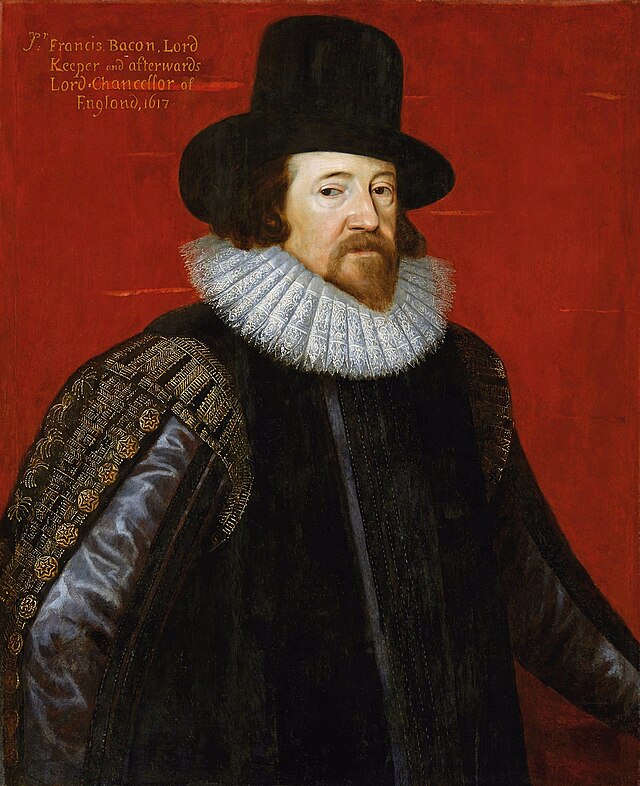
Understanding as the Price of Action
Bacon's claim is precise, not merely rhetorical: acting on nature requires knowing its causes, because 'nature is only subdued by submission' — obeyed, in other words, before it can be commanded. A cause grasped in contemplation becomes, in practice, a rule for producing an effect. Knowledge and power are not separate goods pursued side by side; they are the same achievement seen from two directions.
Knowledge and human power are synonymous, since the ignorance of the cause frustrates the effect; for nature is only subdued by submission, and that which in contemplative philosophy corresponds with the cause in practical science becomes the rule.
Why This Breaks with Scholastic Learning
The claim is aimed squarely at a learning that prized disputation over effect. For Bacon, a philosophy that produces no new works has, by definition, produced no real knowledge — a standard that makes his entire method, and the institutions like Salomon's House that would later embody it, answerable to results rather than eloquence.
Drawn from Book I, Aphorism III of Novum Organum.
Related Concepts