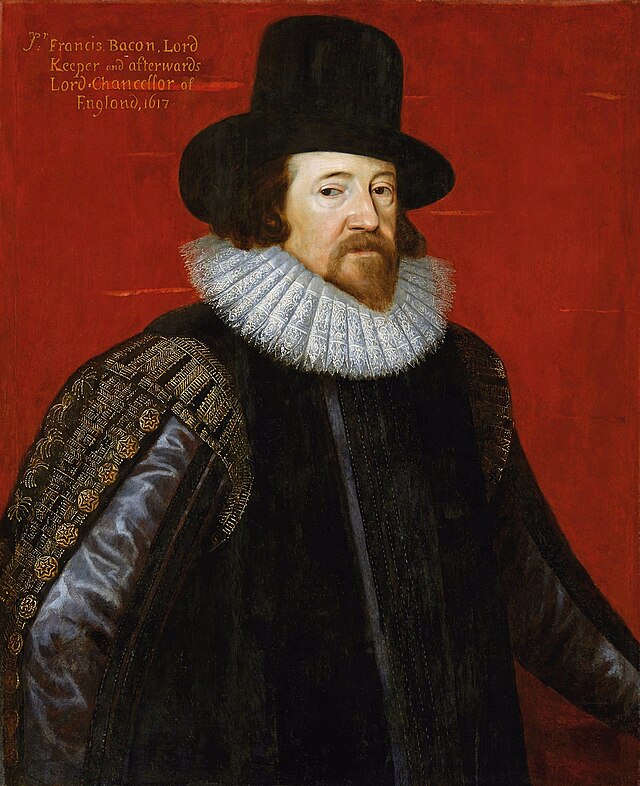
Four Species of Illusion
Bacon names them by where they originate: Idols of the Tribe are built into human nature itself; Idols of the Den belong to the individual, shaped by education, habit, and temperament; Idols of the Market arise from the imprecision of language and the commerce of everyday speech; Idols of the Theatre are inherited from received philosophical systems, 'so many stage-plays' dressed up as truth.
Four species of idols beset the human mind, to which (for distinction’s sake) we have assigned names, calling the first Idols of the Tribe, the second Idols of the Den, the third Idols of the Market, the fourth Idols of the Theatre.
Idols of the Tribe
The Tribe's idols are the hardest to escape because they belong to the species, not the individual: the senses are weak, the passions distort judgment, and the mind is 'restless' — always straining past what it actually observes toward premature generalisation. No amount of learning removes them; only a disciplined method that distrusts the mind's own instincts can compensate.
Such are the idols of the tribe, which arise either from the uniformity of the constitution of man’s spirit, or its prejudices, or its limited faculties or restless agitation, or from the interference of the passions, or the incompetence of the senses, or the mode of their impressions.
Drawn from Book I, Aphorisms XXXIX and XLI–LII of Novum Organum, where Bacon introduces and elaborates the doctrine of the idols.
Related Concepts