Technology as a Mode of Revealing
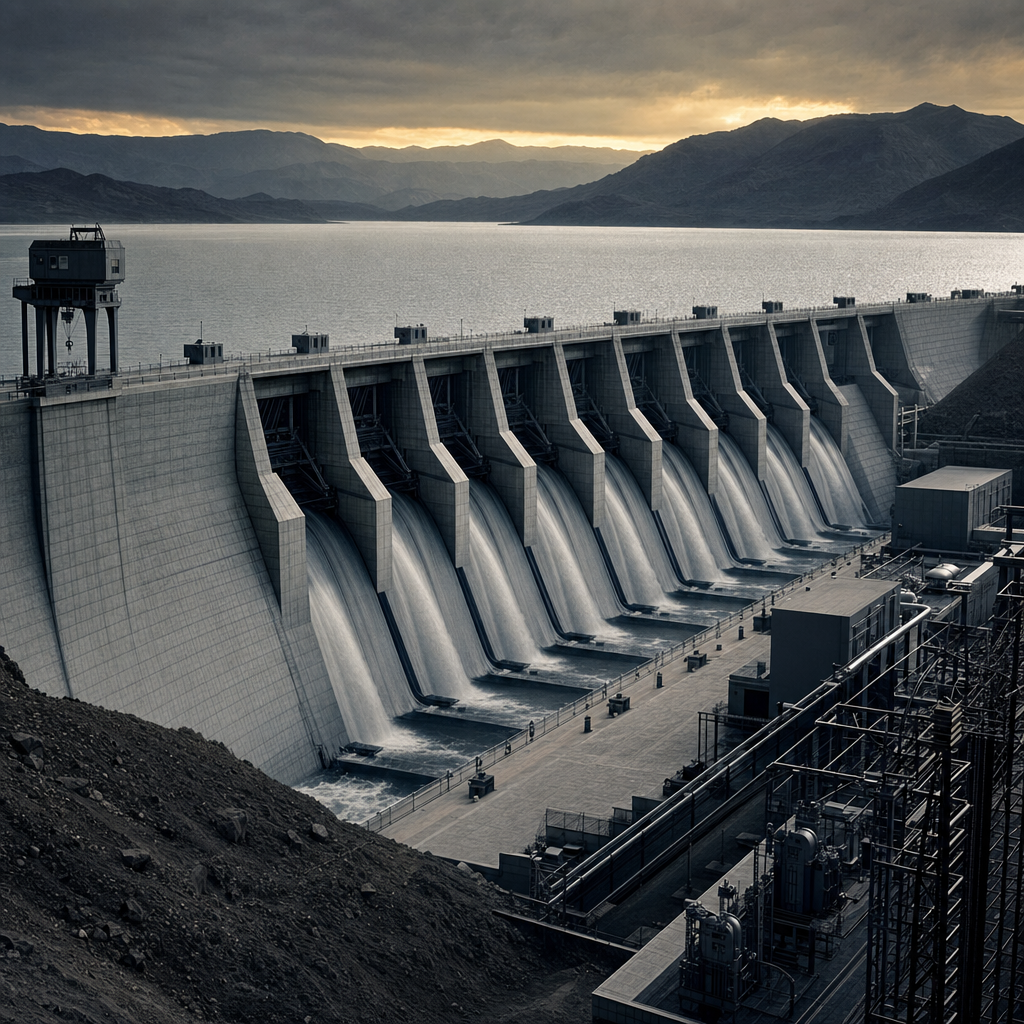
All technology, ancient and modern, involves a kind of bringing-forth: the craftsman brings the silver cup into presence through the material and its form; the windmill catches the wind's energy. But modern technology differs from ancient techne in its manner of disclosing: it does not draw forth a hidden potential and let it stand in its own presence. Instead, it challenges nature, demanding that it deliver energy that can be extracted, stored, transformed, and distributed on demand. The Rhine as tourist attraction conceals the Rhine as standing-reserve of hydraulic power; both conceal the Rhine as river.
Standing-Reserve and the Human
Enframing does not stop at natural resources. Human beings themselves become standing-reserve in the age of technology: human resources, human capital, labour-power to be optimised and deployed. This is not a conspiracy of corporations or states; it is the destiny of an epoch in which Gestell determines the fundamental mode of revealing. What is most dangerous is not any particular technology but the totalisation of technological revealing — the possibility that no other relationship to beings remains available, that wonder, letting-be, and genuine dwelling are not simply neglected but have become unintelligible.
The Holding Sway of Gestell
Gestell does not arrive as a human invention or decision. It comes over us — it is a destining (Geschick) of being, a way in which being itself sends itself to us in this epoch. This means that Gestell cannot be overcome by human will, by better technology, or by moral resolve. It can only be addressed from within thinking — from a relationship to being that has been liberated from the grip of Enframing. But this liberation cannot be willed; it requires what Heidegger calls Gelassenheit, releasement: a letting-be that is the opposite of the challenging-forth that defines modern technology.
"The Question Concerning Technology" was delivered as a lecture in 1953 and published in the 1954 collection Vorträge und Aufsätze. The concept of Gestell is the conceptual centre of Heidegger's philosophy of technology and has been enormously influential in subsequent philosophy of technology, media theory, and environmental philosophy.
Related Concepts