Doubt and Inquiry
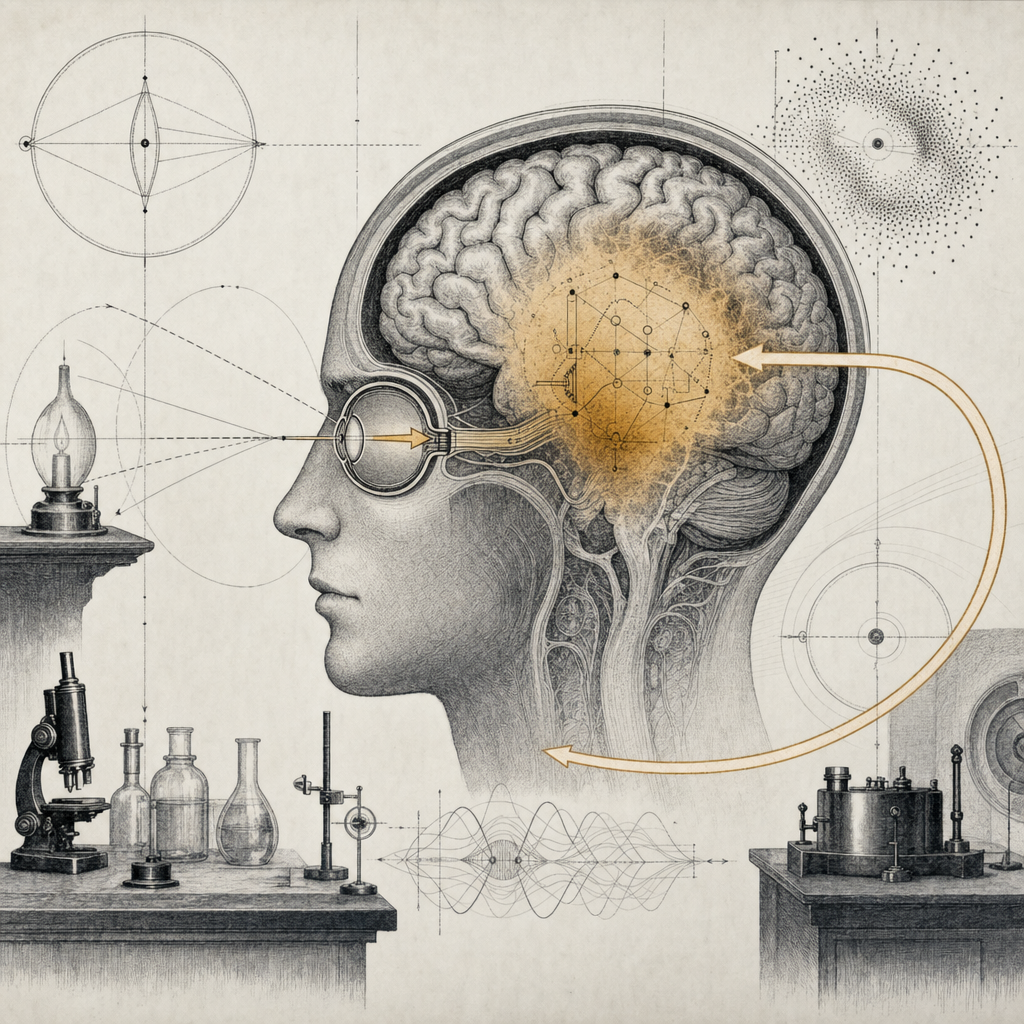
Peirce strips inquiry of its ceremonial dress. We do not doubt at will, as Descartes pretended; real doubt is a live irritation, and the whole function of thought is to appease it by producing belief — a rule of action, a habit. When the habit is fixed, inquiry stops. Truth, at this stage of the argument, does not even enter: the sole object of inquiry is the settlement of opinion.
The irritation of doubt causes a struggle to attain a state of belief. I shall term this struggle inquiry
Four Methods of Settlement
There are four ways opinion has in fact been fixed. The method of tenacity — clinging to what one already believes and shunning whatever might disturb it — fails because we are social: other people believe otherwise, and the contagion of that fact reawakens doubt. The method of authority — letting the state or the church fix belief for everyone — is stronger, and Peirce grants it has ruled most of human history; but no institution can regulate opinion on every subject, and comparison with other ages and nations breeds the fatal suspicion. The a priori method — believing what is agreeable to reason — is more intellectual, but it makes belief a matter of taste, and fashions in taste swing like a pendulum.
The Method of Science
What is needed is a method by which beliefs are determined by nothing human, but by some external permanency — something on which our thinking has no effect. That is the hypothesis of real things, and the method built on it is science. Its superiority is not that it starts from certainty; it is that it alone makes room for self-correction, and it alone does not depend on keeping inconvenient facts out of view. A person who chooses it, Peirce says, should love it and defend it as a knight his chosen lady — a striking ending for an essay that began with the mechanics of irritation.
First published in Popular Science Monthly, November 1877; reprinted as the first paper of Part I of Chance, Love, and Logic.
Related Concepts