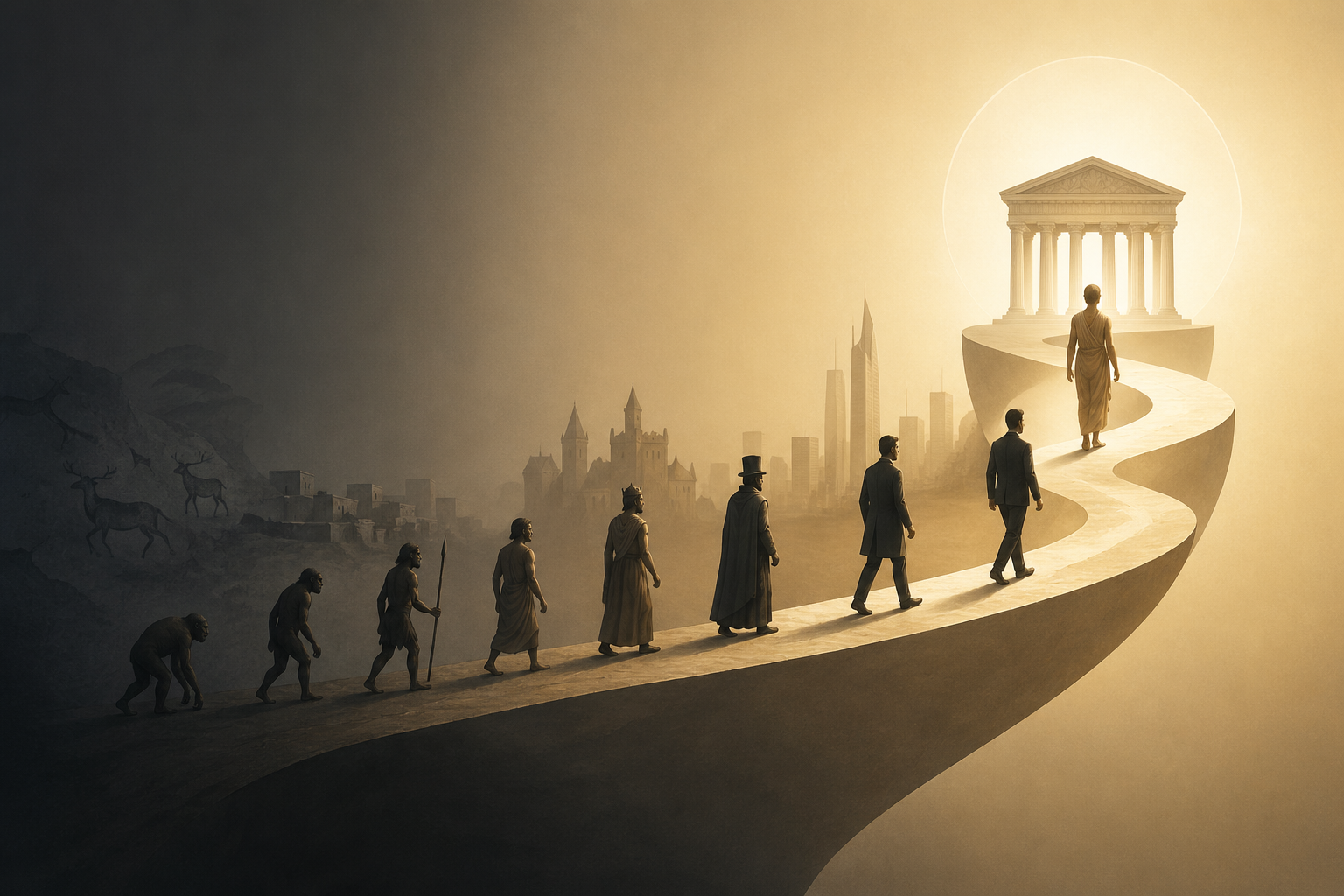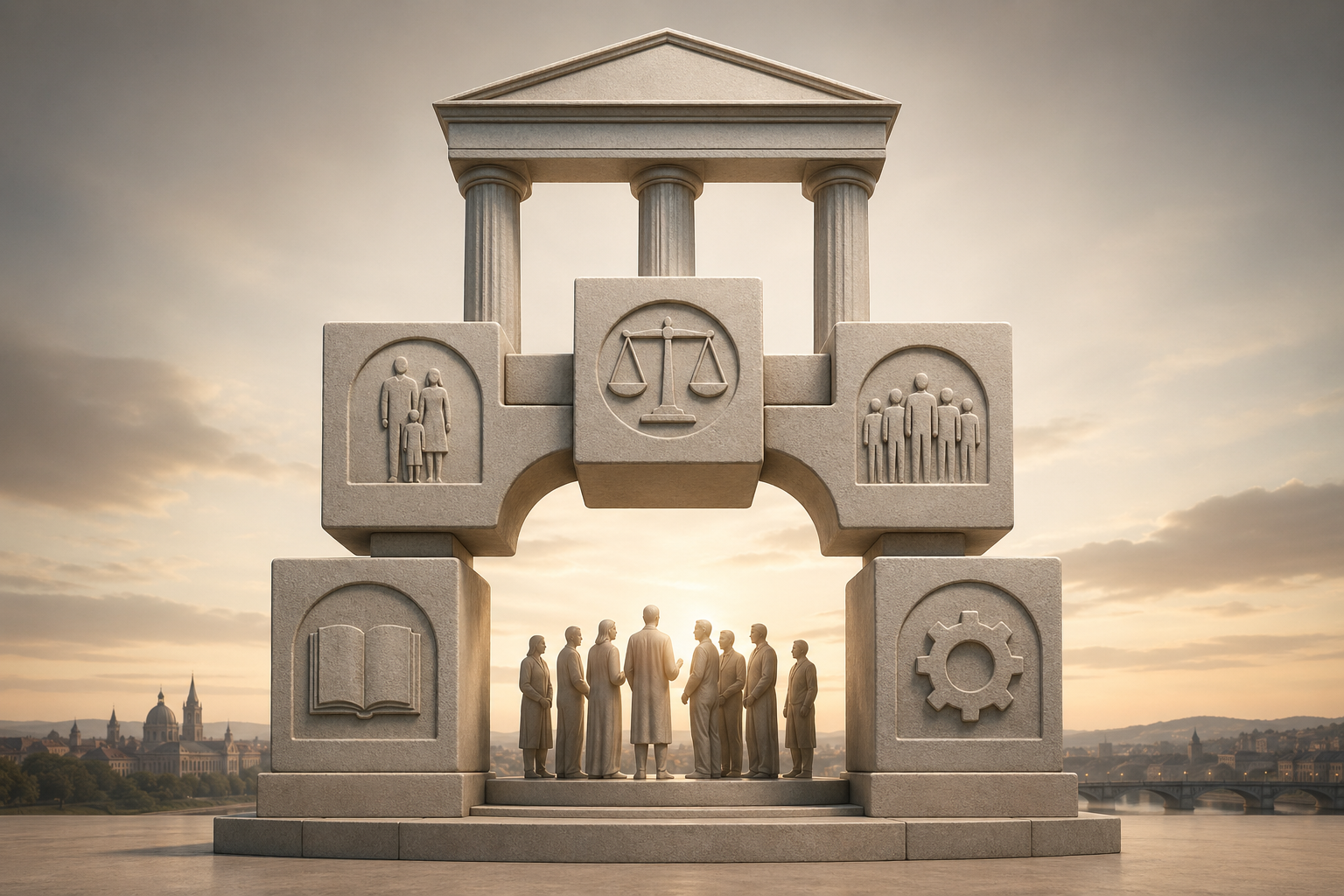
Hegel's definitive statement of political philosophy, unfolding the concept of freedom as it realises itself through Abstract Right (property and contract), Morality (the subjective will), and Ethical Life — the concrete institutions of family, civil society, and the state. The work is famous for its claim that the state is the actualisation of ethical life, described as "the march of God through the world," and for its sharp distinction between the contradictions of civil society and the rational totality of the state that contains them. Marx's critique of Hegel's political philosophy was the direct springboard for historical materialism.