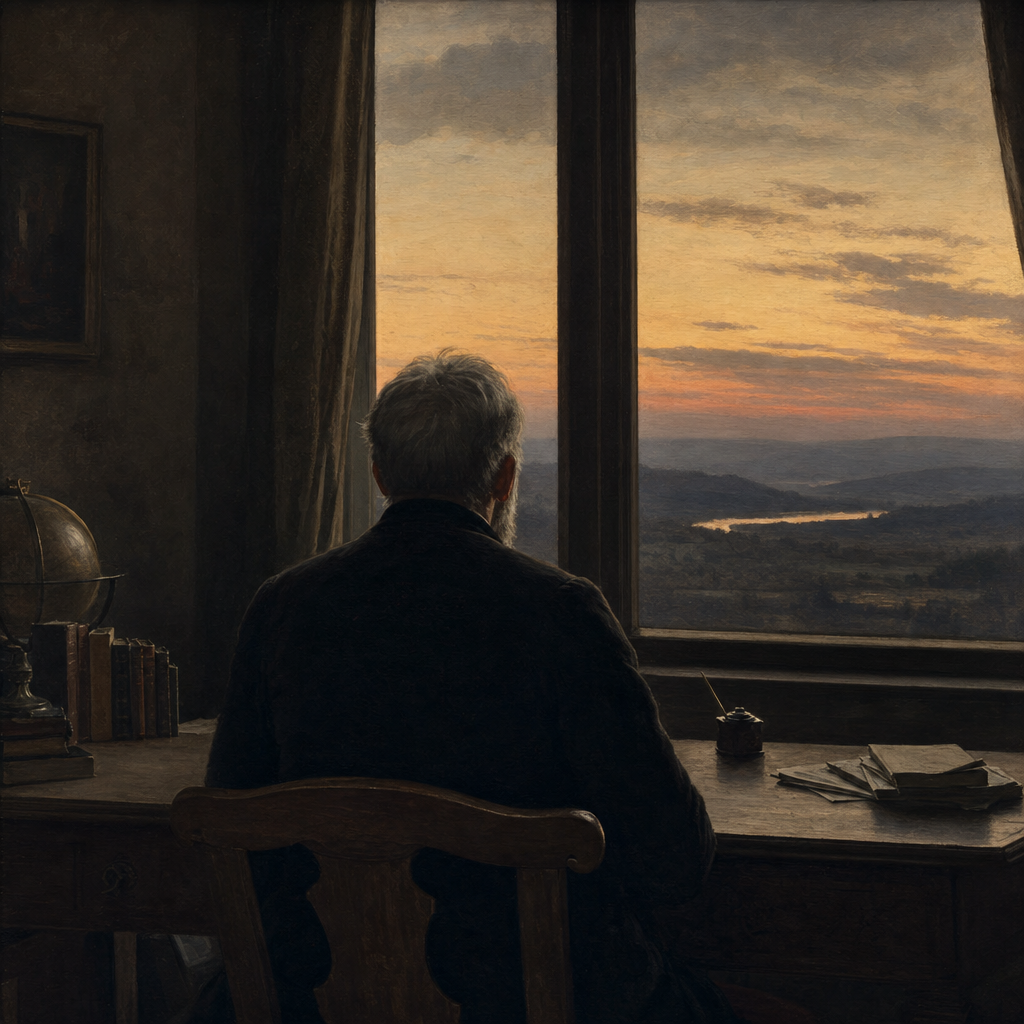
Hermeneutics and the Study of History collects the essays in which Dilthey worked out his mature theory of historical understanding and hermeneutics, above all the foundational 1900 essay 'The Rise of Hermeneutics' and the 1910 fragment 'The Formation of the Historical World in the Human Sciences.' In these texts, Dilthey argues that hermeneutics — the theory of interpretation — is not merely a technique for reading ancient texts but the general methodology of all the human sciences, grounded in the structure of lived experience itself. Historical understanding is possible because the human being who lived in the past was, like the historian, a bearer of inner experience that expressed itself in outer forms. The three-part structure of experience–expression–understanding (Erlebnis–Ausdruck–Verstehen) defines the hermeneutic circle: to understand an expression, I must reconstruct the experience behind it; to identify an experience, I must interpret the expressions through which it reached me. The circle is not vicious but productive — each pass through it deepens understanding — and it applies not just to texts but to all historical life-expressions, including actions, institutions, laws, and artworks. These essays represent the deepest and most original stratum of Dilthey's thought and were the direct inspiration for Heidegger's hermeneutic phenomenology and Gadamer's Truth and Method.
This work isn't available here yet. In the meantime you can purchase a copy on Amazon, or check back later, as we are always adding books to our library.
As an Amazon Associate we earn from qualifying purchases.