From Comprehensive to Political Doctrine
Rawls's major revision of A Theory of Justice was to transform its foundation. The earlier work rested justice on a comprehensive liberal doctrine — a full theory of rational autonomy and the good. Political Liberalism argues that this is too much to ask of citizens who hold different comprehensive views. Instead, justice must be freestanding: a political conception that citizens can affirm without abandoning their deeper commitments.
The Structure of Consensus
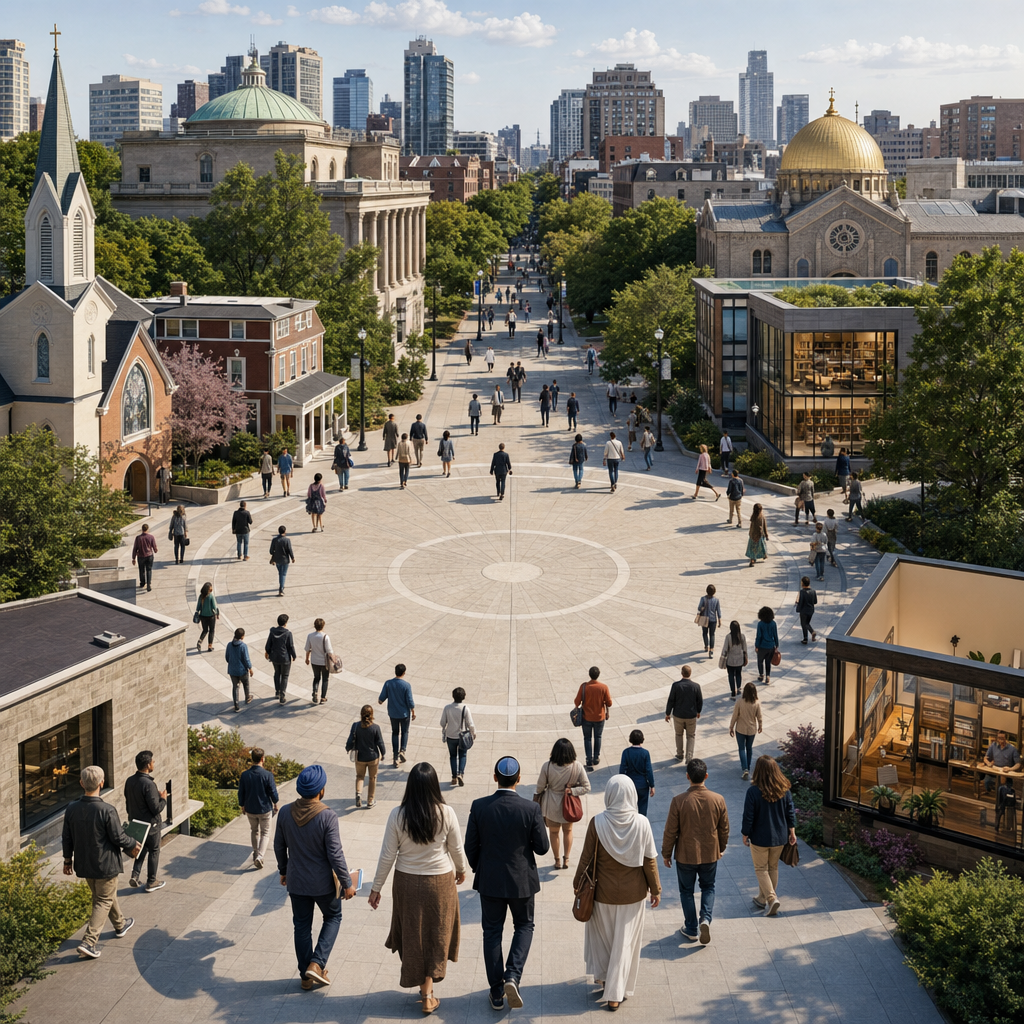
The overlapping consensus is not a modus vivendi — a pragmatic compromise that each party accepts only because it cannot do better. It is a genuine moral consensus: each comprehensive doctrine affirms the political conception for moral reasons internal to it. The Catholic affirms justice for reasons grounded in natural law; the secular liberal for reasons of autonomy; the religious pluralist for reasons of mutual respect. The convergence is real even though the routes differ.
Stability for the Right Reasons
A just society based on overlapping consensus is stable "for the right reasons" — not merely because no party can overturn it, but because each affirms it as genuinely just from their own perspective. This is the kind of stability Rawls thinks a liberal democracy requires: not mere coexistence under threat of force, but genuine acceptance rooted in citizens' own deepest values.
The overlapping consensus is developed in Lecture IV of Political Liberalism; Rawls distinguishes it from modus vivendi in section 4.
Related Concepts