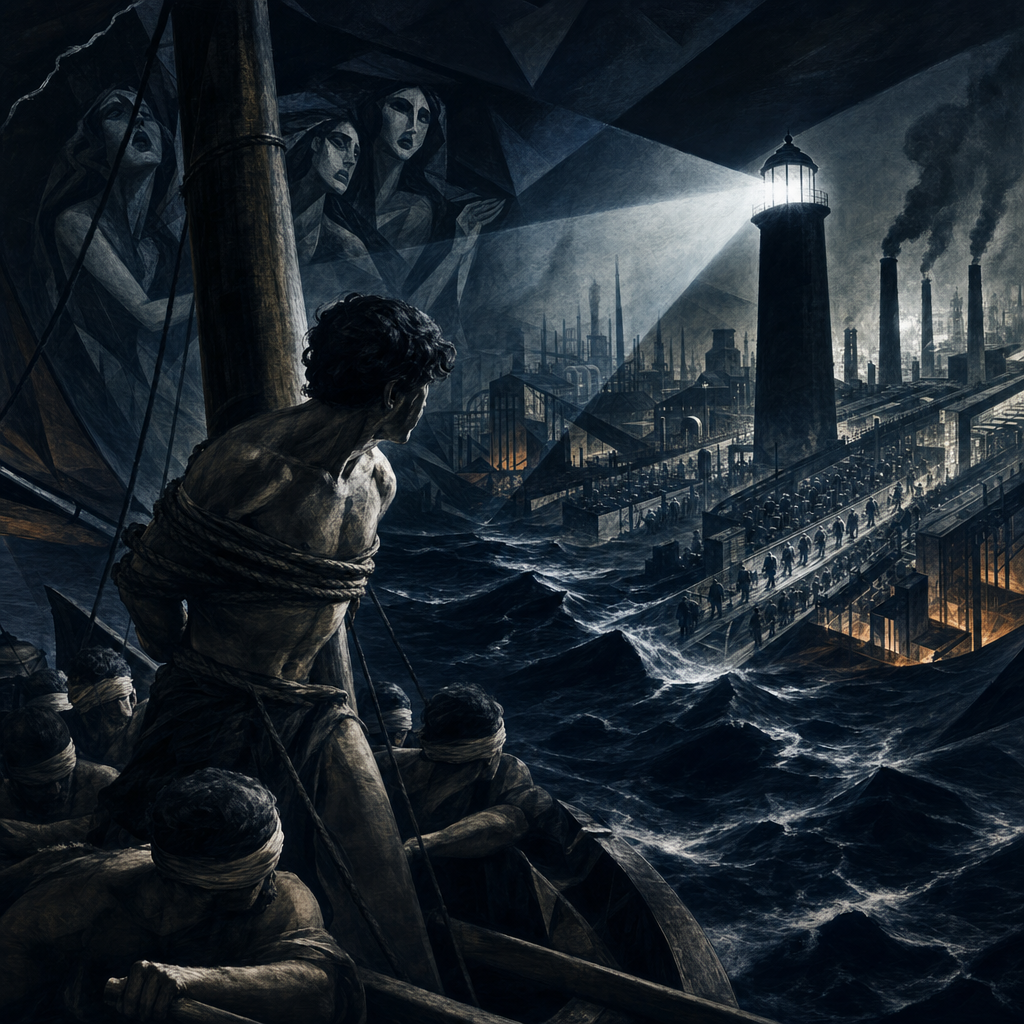
Aesthetic Theory, left unfinished at Adorno's death in 1969 and published posthumously, is his major work in the philosophy of art — a systematic account of the relationship between art, society, and truth that is also one of the most demanding texts in the entire tradition of aesthetics. The book's central claim is that authentic art — art that refuses accommodation to the administered world — preserves a "truth content": it registers in its form the unresolved contradictions of social reality, the suffering and possibility that ideology suppresses. Art's autonomy from social function is not mere escapism but the condition of its critical power: only by standing apart from the purposes that society assigns to things can art speak the truth that direct, affirmative discourse cannot. The book moves between philosophy of art, historical analysis of modernism, and theory of aesthetic experience, always insisting that the two poles of art's significance — its formal autonomy and its social content — are inseparable.
This work isn't available here yet. In the meantime you can purchase a copy on Amazon, or check back later, as we are always adding books to our library.
As an Amazon Associate we earn from qualifying purchases.